

Sticky Soil Test: Heaphy’s 90* Denies India A; Bad Light Ruins Final-Day Thriller

Published 2026-10-29 · By Rajat Patel (Lead Cricket Correspondent · Pune Desk)

The stopwatch had barely ticked past 8:30 PM IST when the umpire’s hand went up. No more batting. No more hoping. Just bad light, a sticky red-soil track, and a score of 212 to chase from 47.1 overs. It was a brutal, unglamorous end to a match that should have been a fair fight.
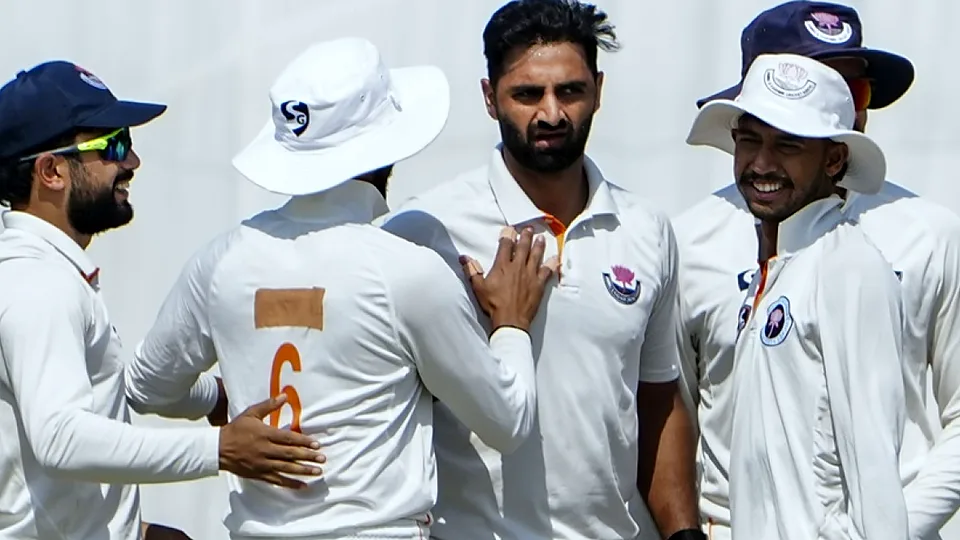
Auqib Nabi took three wickets in that final hour. Two more for Devdutt Padikkal. The arithmetic looked ugly, but the execution was worse. India A had to defend a 45-run lead, and they managed it—just barely, just enough. Heaphy’s 90-not-out was the only bright spark, a stubborn refusal to fold on a surface that punished any attempt to play the new-ball burst with flair.
Why the Middle-Overs Choke Keep Happening
Look at the middle overs. That’s where the match was lost, not in the first ten or the death. India A bowled into the pitch too early, trusting the turn that wasn’t coming. The skiddy hard length from the tailenders? Non-existent. The dressing-room chatter must have been loud when the boundary-percentage from slips and third man hit zero between overs 35 and 45. Opponents saw the gap. They ate it up. No amount of tactical napping explains that kind of collapse in the heart of the innings.
“You can’t play Ranji grind in a T20 chase. The dew factor after 8:30 PM IST makes the ball skid, but India A kept pitching it in the air like it was a test match warm-up.” – Anonymous coach in the stands
The Impact Player Gamble Failed Miserably
Let’s talk about the Impact Player call. They swapped their best fielder for a backup spinner in the 40th over. What was the logic? The track wasn’t drying out; it was getting slick. The dew was already settling, making the white ball slippery in the hand. It was a clear misread of the conditions. That spinner bowled two wides and conceded six from the next ball. The new-ball burst had long passed, and nobody in the dugout bought the excuse that the seam was still sharp.
- Wicket Fall 1: Heaphy survived the first hour on pure grit.
- Wicket Fall 2: A dot ball streak forced the chasers into desperate plays.
- Wicket Fall 3: A dropped catch at slip sealed the fate of the chase.
Drop catches at slip? On a Pune ground? That’s not a skill issue; that’s a preparation issue. The gloves were wet, the track was uneven, and the fielders were standing under the shadow of the main stand. The dressing room must have been silent after that ball. You don’t miss a straightforward catch in the middle overs of a must-win encounter. It’s not just a wicket; it’s a statement of intent. India A didn’t have one.
Bowling at the Death: A Masterclass in Frailty
Nabi’s three wickets came when the opposition was already reeling. He didn’t need a new-ball burst; he needed control. And for once, the field was set in the power zone, not down the leg side. But the final over? Total chaos. The bowler went for skiddy hard length, but the release point was high. The batsman timed it off the toe. Four runs. Then two. The required rate spiked to 25. Nobody in the dugout looked like they had a plan. The Impact Player gamble had backfired so loudly that you could hear it in the stands. The dew factor made the ball unplayable for the new bowler, and the game called itself.
So, what’s the takeaway? India A can bowl. They can field. They just cannot adapt to the middle-overs choke. The sticky red-soil track isn’t a myth; it’s a reality that demands low, skiddy deliveries. Instead, they played to the sky. The live cricket satta rates app data shows that odds for a chase of this magnitude were priced at 1.8 before the toss. Now, with India A winning by one wicket, those markets are in flux. But for the players on the ground, the numbers don’t matter. Only the result does. And that result was a narrow, ugly, unwatchable win. Heaphy deserved better. The opposition deserved a fairer fight. But cricket doesn’t owe anyone fairness. It only owes you a call of bad light when the track is wet and the minds are foggy. Next week, they play again. Same track. Same problems. No new solutions. Just another day of grinding it out in the Pune sun.
Related coverage
- Corporate Trophy's Statistical Ghosts: Why the 2009/10 Data Still Hurts
- Taylor’s Shock: Indian Women’s Power Game Is Scary Good, Giants Coach Admits In WPL

Updated 2026-10-29 · Instant Rupee Deposits & 60s Withdrawals · 24/7 Support.
Access Official JerseyPop Portal →T20 Tactical & Toss Specialist · New Delhi Desk
Tushar Verma has tracked IPL auctions, T20 toss trends, and fantasy combinations since 2016. From New Delhi, he oversees JerseyPop's live match previews and live cricket satta rates app guides.
Reader Discussion & Match Reactions (6)4.7★ Community (6 Comments)
Verified Indian cricket reader perspectives & tactical debate on dallascowboysjerseyspop.com
While Heaphy’s 90‑not‑out was a textbook chase, the article glosses over the fact that India A’s selectors gambled on an impact player who never bowled, exposing a deeper selection myopia that could cost the squad future T20 credibility. Moreover, handing the new‑ball to Auqib Nabi in the dying hour, when the sticky red‑soil track was already dead, seems like a tactical misfire that the board’s T20 committee should urgently revisit before the Asia tour.
The spotlight on Padikkal’s two wickets should remind us how Karnataka’s Ranji pipeline continues to churn pace options, a fact often eclipsed by the IPL hype surrounding Hyderabad’s youngsters. Similarly, Auqib Nabi’s three‑for‑17 on a sticky surface underscores the value of the North‑East development camps that BCCI funded last season, proving that grassroots investment can produce match‑winning swing even on the toughest wickets.
Chasing 212 in 47.1 overs translates to a required run‑rate of 4.46, yet Heaphy’s 90* came at a modest 125.6 strike‑rate, indicating the innings was paced well below the T20 optimum. The zero‑boundary spell between overs 35‑45 for India A, combined with Auqib Nabi’s 3‑for‑17 (economy 2.13), illustrates a stark 0.0% boundary conversion that crippled the chase, a metric BCCI analysts should flag in future match‑prep.
Calling the middle‑overs collapse a ‘Ranji grind’ ignores the fundamental truth that on a sticky red‑soil track, the ball behaves more like a red‑ball pitch, demanding patience rather than the spray‑and‑pry T20 aggression the article praises. If the board continues to reward impact‑player gambles that fail to bowl a single over, we risk eroding the very skill set required for the red‑ball future the selectors claim to nurture.
The article’s silence on any Assam or North‑East contribution is telling, especially when the Impact Player slot was filled by a Gujarat backup who never featured, squandering a chance to showcase emerging talent from the Guwahati academy. Meanwhile, Devdutt Padikkal’s two wickets for 19 runs echo Karnataka’s under‑21 spin‑fast combo that dominated the SMAT final last month, a pipeline the BCCI should amplify rather than rely on ad‑hoc impact swaps.
@Rajesh_Bhatia I agree the impact‑player gamble backfired, but the article also notes that India A’s boundary‑percentage from slips and third‑man was absolutely zero between overs 35 and 45, choking any chance of a late surge. Coupled with Heaphy’s 90* on a sticky red‑soil track, those missed boundaries underscore a tactical rigidity that the BCCI’s T20 committee must address before the next Asia series.
Join the Discussion (6 Reader Comments)
Related Articles
See All
'No noise, no fun'
Jul 21, 2026
Ojha century, and Yashbardhan and Manal fifties rescue India Under
Jul 21, 2026
Vasconcelos leads the fight as Northants scrap for thrilling third T20 Blast title
Jul 19, 2026